Table Of Content
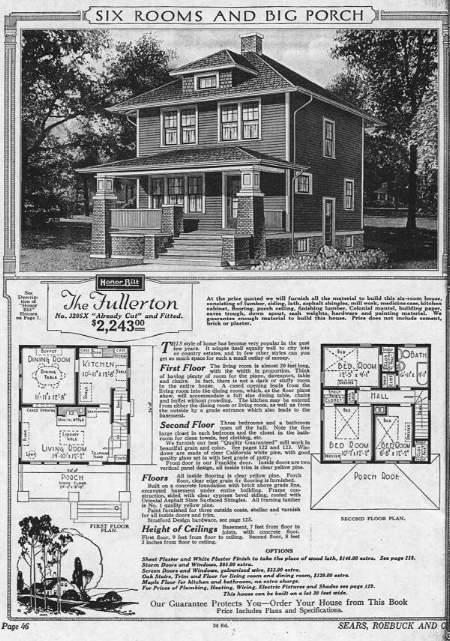
Many of these post 1940 homes were based on models from the 1940 and earlier Sears catalogs but not all were, leading to debate over whether these homes qualify as “Sears Modern Homes”. From 1908 until 1940, Sears, Roebuck and Co. sold over 70,000 kit houses through their Modern Homes and Honor Bilt catalogs. Designs for 370 different plans ranged from the elaborate to the simple; the ‘Goldenrod’, for example, was a three-room vacation cottage (no bath, out-house separate). Today, Sears homes remain as popular as ever, especially among history buffs and home investors.
320 Market Street, Venice, California
Buy It Online, Build It Yourself: You Won't Believe The Next Generation Of Kit Homes - Realtor.com News
Buy It Online, Build It Yourself: You Won't Believe The Next Generation Of Kit Homes.
Posted: Thu, 04 Oct 2018 07:00:00 GMT [source]
You might think that Sears home kits simplypaved the way for modern prefab home kits, but that would be a great underestimationof their broader impact. Both built their reputations and grew theircustomer bases by leveraging mass production without compromising on quality. Because these homes were well-built out ofsturdy materials, some of them still stand today.
This blog is intended purely for educational purposes, and no profit is involved in any way.
Distinctions among the buildings offered, the quality of the materials, and the construction methods used can be confusing. The company decided not just to sell house-building packages, but to finance them as well. The nation’s booming population was straining the seams of a tight housing market, yet the huge and fast-growing middle and working classes (many members of which were recent European immigrants) had been largely ignored by a conservative banking community. If Sears could offer reasonable interest rates and low down payments, the market seemed endless. Although the financing package initially included only building materials, it soon expanded to cover the building lot.
Catalogs by Category
Local building requirements sometimes dictated that certain elements of the house construction be done professionally and varied depending on where the house was constructed. He was convinced that the building supplies could be sold at a profit if storage could be centralized and the goods distributed more rationally—and if there was a little extra incentive for buying them. Instead of abandoning the sale of millwork and other building parts, why not change the way these goods were sold? What if customers could pick a plan for their dream house from a Sears catalog?
Although saving costs is one of the reasonswhy many people turn to home building kits today, it is not the only one, andit wasn’t in 1908 either. The way that the company was able to keepcosts so reasonable for its mail order craftsman home plans was throughdeveloping efficient mass production techniques. You will have noticed that the costs forSears kit homes even back in 1908 were quite affordable.
The city of Elgin, Illinois (seen above) has over 200 Sears homes, more than any other area. As the company failed to keep thorough records, the location of all their homes is unknown. However, they are now coveted real estate and some (per The Wall Street Journal, reporting in 2017) have sold for $1 million. The story of Sears begins in 1886, when a railroad station agent in Minneapolis, Minnesota named Richard Sears started selling gold watches at $14 apiece. The next year, he set up shop with watchmaker Alvah Roebuck on Dearborn and Randolph Streets in Chicago.
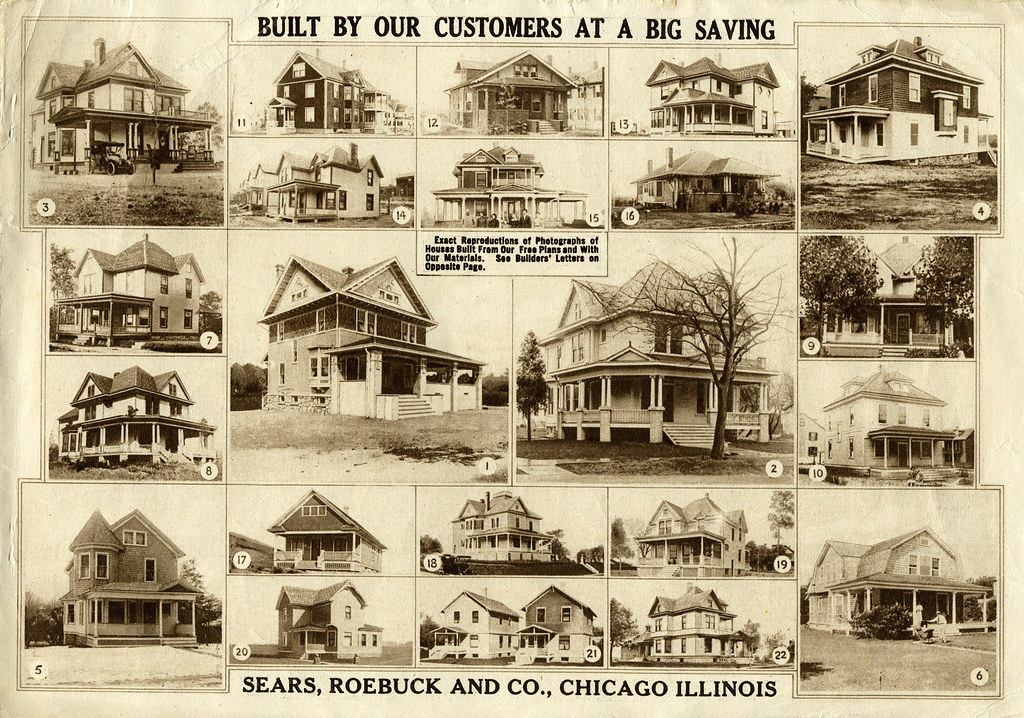
The Aladdin Company was just one competitor already testing the waters with such an idea, and Sears quickly followed the same path. It may be hard to believe now, but Sears, Roebuck & Co. (Sears) helped build American neighborhoods as we know them today. Sears kit homes were an easy way for members of the middle class to realize their dreams of homeownership. Once purchased by catalog, the building materials were shipped in railroad cars and fully erected in as little as 90 days. Why not sell houses in kit form through his already ubiquitous Sears & Roebuck catalog?
Sears Houses Insider Information
Instead of trying to sell one material ortool at a time, Kushel came up with the idea of bundling together the surplussupplies into building kits. We settled on Vallonia, because of the awning, but the porch and columns are all wrong. It was also built in 1902, and Sears didn’t start selling homes from their catalog until 1908. The 1960s brought more competition, in the form of new discount department store chains like Target, Walmart and Kmart. Annual sales rose to $10 billion by the early ‘70s, and the company moved its headquarters into what was then the world’s tallest building, the Sears Tower in Chicago, in 1973.
Column detail from a Sears Vallonia house, pictured alongside its appearance in the catalog. Original paperwork for the house including blueprints and letters of correspondence from Sears. Sears houses can be identified or authenticated using the following methods. I love old houses, working with my hands, and teaching others the excitment of doing it yourself!
To provide the materials needed for the Modern Homes division, Sears operated a lumber mill in Cairo, Illinois. Although it is sometimes claimed that no Sears kit homes were built after 1940, Sears continued to offer pre-cut kit homes through 1941 and into early 1942. In theory, really handy homeowners could—and some did—put together their own Sears houses with only the aid of the instruction manual. More often, the actual construction was left to—or at least required considerable help from—a local builder.
The answer to this question can be found on this Sears House Seeker blog post. Scroll down to the section with that title, to learn more about plans-only companies. They had enough supplies and reach that their Honor Built products could span a large gamut of projects from small to large to satisfy alpost any need of the public.
Over in Sears & Roebuck’s home state of Illinois, we found this gorgeous Crescent model Sears catalog home up for sale at a tantalizing price. Even better, unlike the other homes we’ve seen so far, 1670 Whitcomb seems largely untouched from its original design. Most of the houses had two or three bedrooms, although some had four or even five. The majority had only one bathroom, and some, especially in the early 20th century, had none, since many rural and even some suburban areas lacked piped-in water and sewers or septic fields. Alternatively, customers could opt for “sheet plaster” (gypsum board, an early form of wallboard) at considerably greater expense. For roofing, they could choose between red cedar shingles or the costlier “Oriental Asphalt” shingles, which came with a 17-year guarantee.
House-plan books like those from Palliser & Palliser date back to the Victorian period; full construction drawings were offered, and sometimes also a millwork package. By the middle of the bungalow era, a host of companies offered pre-cut kits, which would be shipped by rail for on-site construction. Not only lumber but also everything down to the nuts and bolts, and even paint, were included. Leading sellers included Keith’s, Aladdin, Sears, Harris Brothers, Montgomery Ward, and Gordon–Van Tine. Why did a company renowned for its catalog success choose to sell homes? A former manager of the Sears china department turned a loss into a sales leader when he suggested bundling this stagnant inventory into a home kit.
These homes came in 30,000-piece kits and were shipped to all 48 states. Sears promised that a man of average abilities could have these homes assembled in about 90 days. Sears Modern Homes offered more than 370 designs in a wide range of architectural styles and sizes over the line's 34-year history. Most included the latest comforts and conveniences available to house buyers in the early part of the twentieth century, such as central heating, indoor plumbing, telephone, and electricity. Some models of Sears homes were very similar in design to models offered by other kit home manufacturers or through plan books. Designs may have been modified but generally should match in layout and dimensions.
Instead of hiring an architect and an army of carpenters, prospective homeowners could now simply place an order and get plans and building materials delivered right to their property. Sears prided itself on offering floor plans that were both efficient and attractive, maximizing the usability of very limited space. The smaller houses sometimes combined living and dining rooms, while the smallest made do with a built-in eating nook or the kitchen table. There is a tendency to think of the “Sears House” as a monolithic entity, but there were actually many different Sears catalogs that offered houses and auxiliary buildings, such as garages. Others continued to sell just lumber and building parts, which had been a Sears staple.